|
|
D2D: Detector-to-Differentiable Critic for Improved Numeracy in Text-to-Image Generation
Nobline Yoo,
Olga Russakovsky,
Ye Zhu
arXiv, 2025
[paper]
[website]
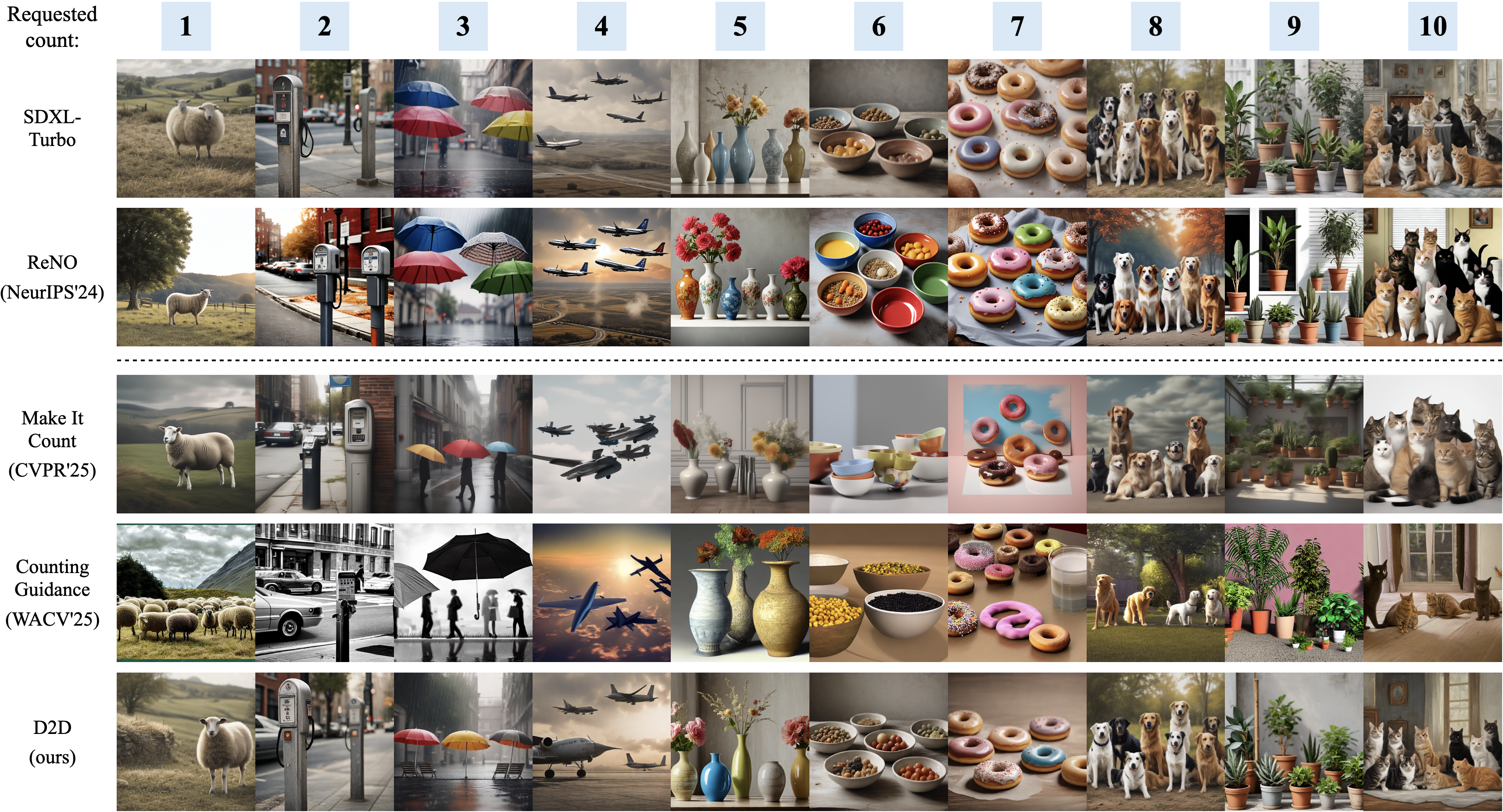
We propose a novel framework for improving numeracy in text-to-image diffusion models, by enabling robust but non-differentiable
object detectors to become differentiable count critics. We design custom activation
functions to convert detector logits into convergence-friendly gradients, which are then used to optimize the
initial noise on frozen, pre-trained T2I models. Extensive experiments on across base models and benchmarks of varying complexity (low-density, high-density, and multi-object scenarios)
demonstrate substantial improvements in numeracy.
|
|
|
Efficient, Self-Supervised Human Pose Estimation with Inductive Prior Tuning
Nobline Yoo,
Olga Russakovsky
Proceedings of the IEEE/CVF International Conference on Computer Vision (ICCV) Workshops, 2023
[paper]
[poster]
[code]
[video]
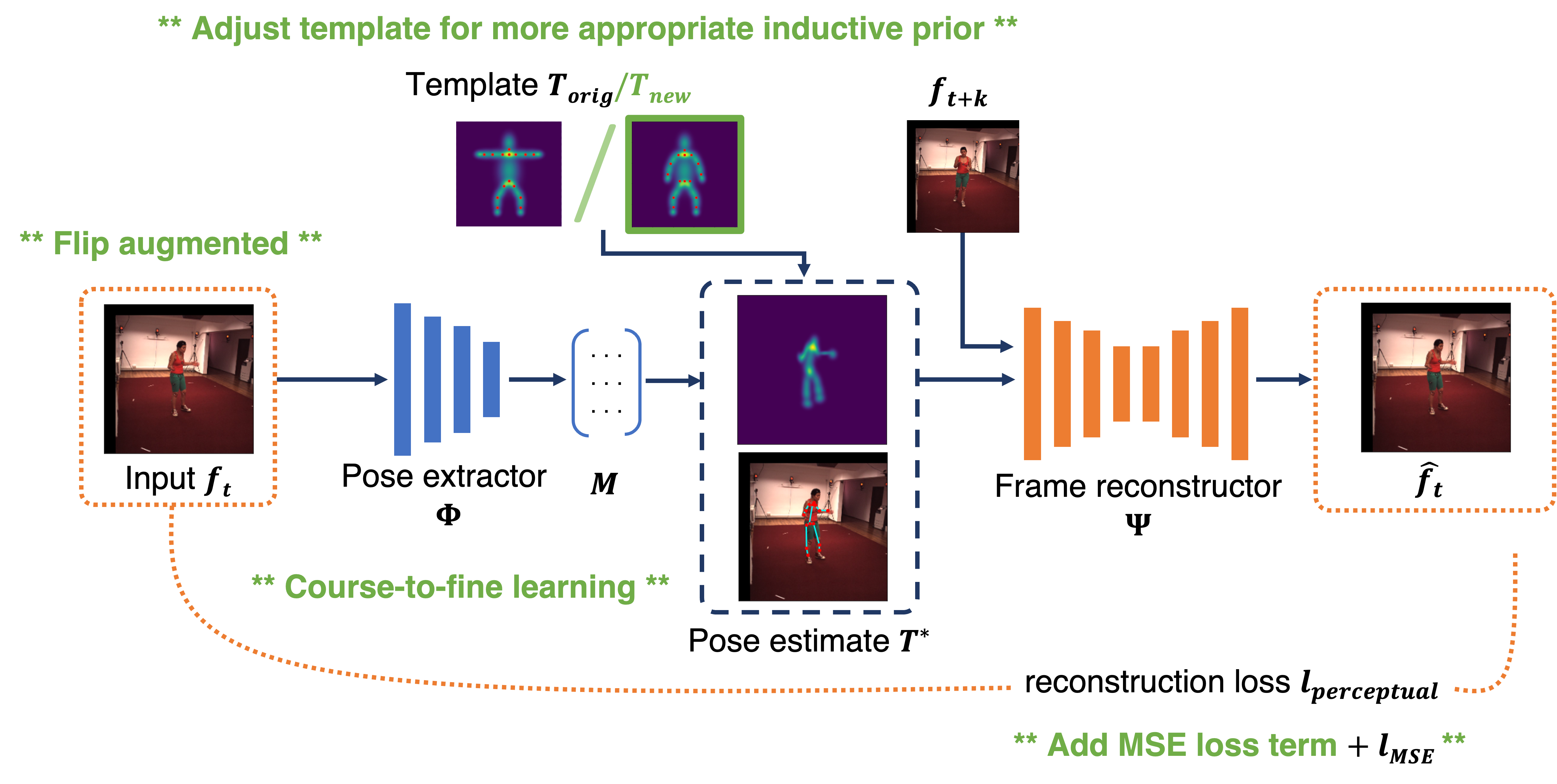
We explore the pose estimation-reconstruction alignment task that is central to self-supervised learning in human pose estimation.
We show that inductive-prior tuning helps coordinate
pose learning alongside reconstruction and propose a new metric
that measures limb length consistency in a no-labels setting. Our model outperforms the baseline using less than 30.3% the amount of training data.
|
|
|
Point and Ask: Incorporating Pointing into Visual Question Answering
Arjun Mani,
Nobline Yoo,
Will Hinthorn,
Olga Russakovsky
Poster spotlight at Visual Question Answering (VQA) workshop at CVPR, 2021
[paper]
[code]
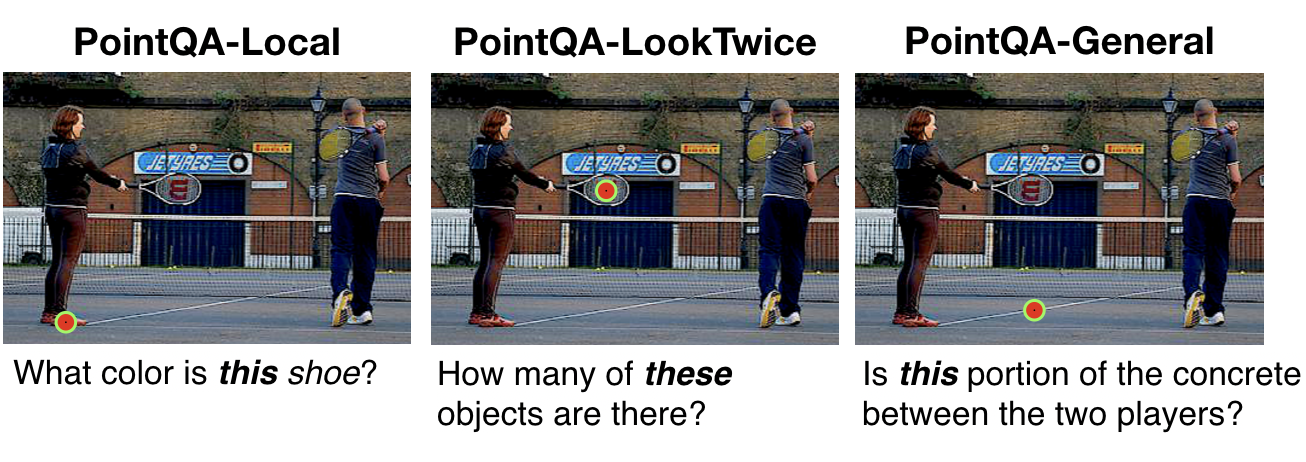
We introduce and motivate point input for VQA questions and propose benchmarks consisting of questions which require
point input (e.g. What color is this book?). We find point supervision is more effective than verbal disambiguation.
|
|
|
VLMs for Better Visual Understanding in Self-Correcting Diffusion Models
Erich Liang*,
Nobline Yoo*
Deep Dive into Large Language Models (Grad) Course Project, Fall 2024
[paper]
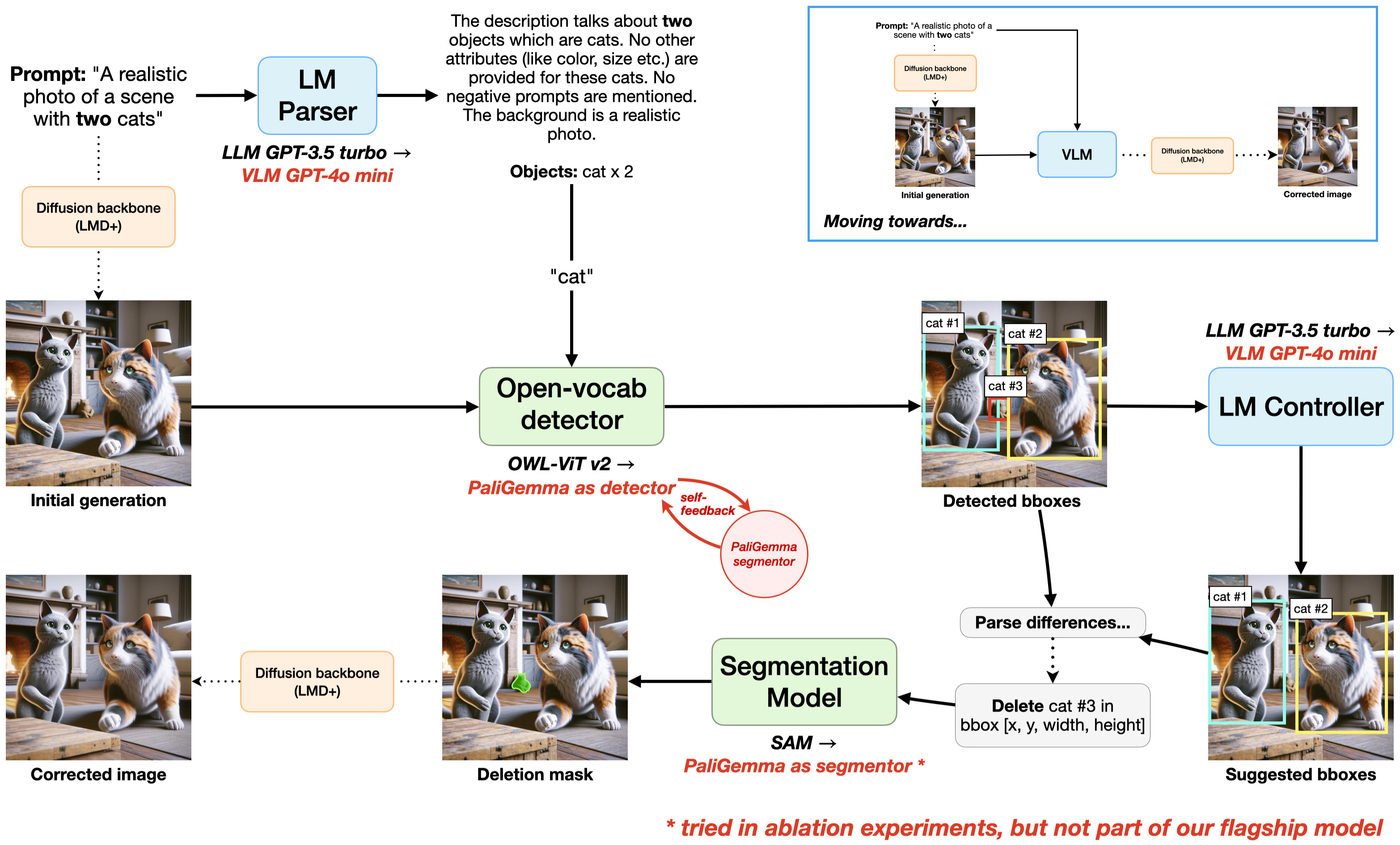
Advances in diffusion models have improved their ability to generate high-quality images based on
text prompts, but they still suffer from issues such as numeracy and spatial reasoning.
One recent work utilizes LLMs, along with an off-the-shelf detector and segmentor,
to iteratively correct diffusion-generated images to better conform to input text prompts along
these axes. However, this approach fails to fully utilize the availability of both visual and textual
understanding to guide this correction process. In this work, we explore the idea of using VLMs instead of
LLMs for diffusion guidance. We show that utilizing a combination of VLMs, such as GPT-4o mini and PaliGemma,
in an image correction pipeline helps achieves better numeracy and FID results. Replacing pipeline components
with VLMs also paves the way toward the use of a single, unified VLM to perform the image generation task, and
we explore this possibility and its implications in this paper.
|
|
|
Computer Vision for Medical Triage in High-Noise, Diverse Environments
Nobline Yoo, Johns Hopkins University Applied Physics Laboratory
DARPA Triage Challenge, Winter 2023
[project page]
Helped develop the DARPA Triage Challenge. Tested computer vision models
to detect hemorrhage and respiratory distress for effective medical triage in high-noise, diverse environments.
|
|
|
Perceptual Losses for Point-Based Neural Fields
Nobline Yoo,
Felix Heide
Neural Rendering (Grad) Course Project, Spring 2023
[paper]
[code]
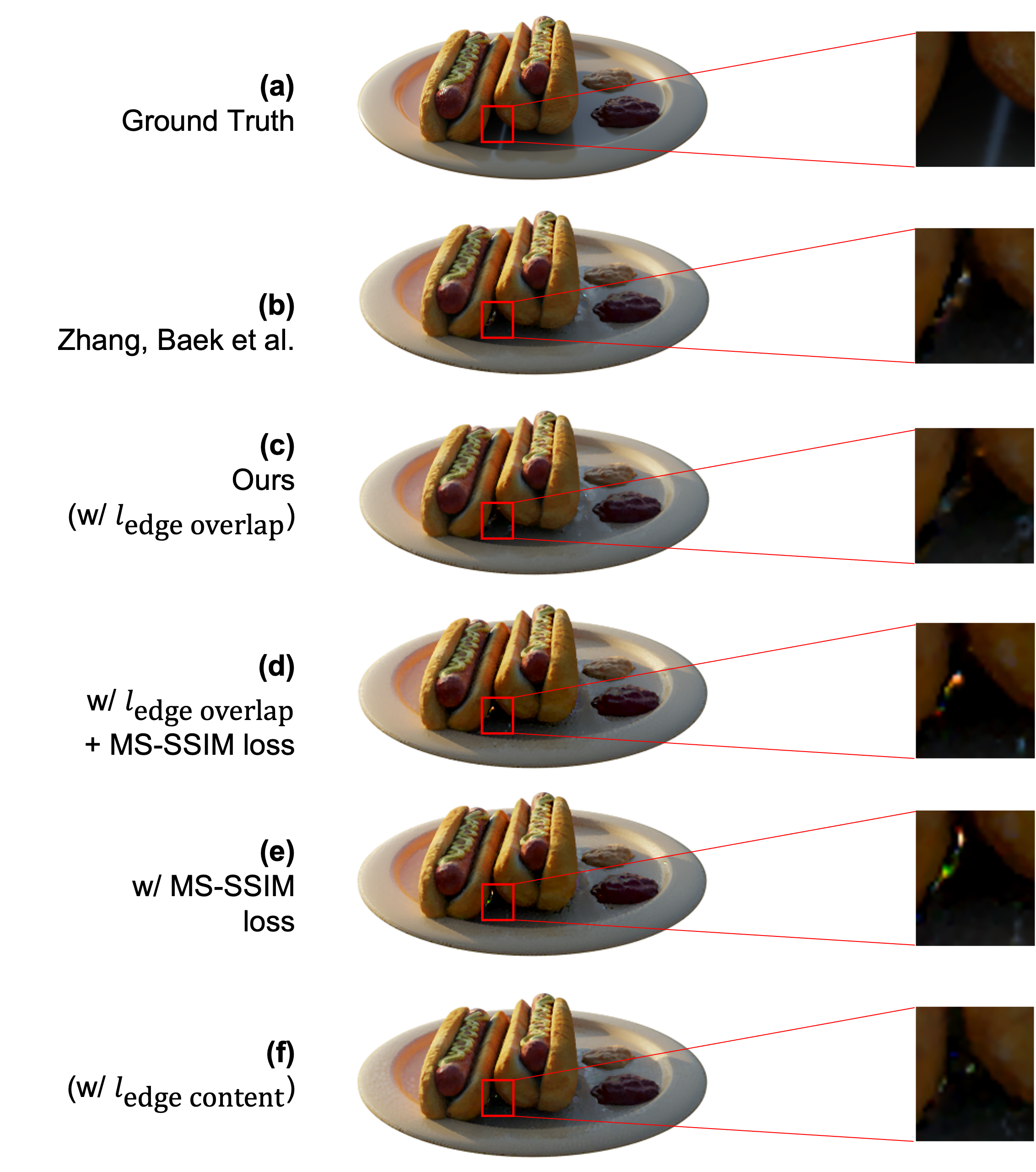
We explore MS-SSIM and Canny edge-based losses for the novel view synthesis method proposed
in Zhang et al. We show edge-based loss reduces
spot artifacts with high levels of detail reconstruction. On a real-world scene from the LLFF dataset,
we introduce a simple modification to Zhang et al. which yields a 4.68 point increase in PSNR.
|
|
|
Prefix Tuning: Optimizing Large Language Models
Grace Wang*,
Nobline Yoo*,
Richard Zhu*,
Karthik Narasimhan
Natural Language Processing Course Project, Spring 2022
[paper]
[poster]
[code]
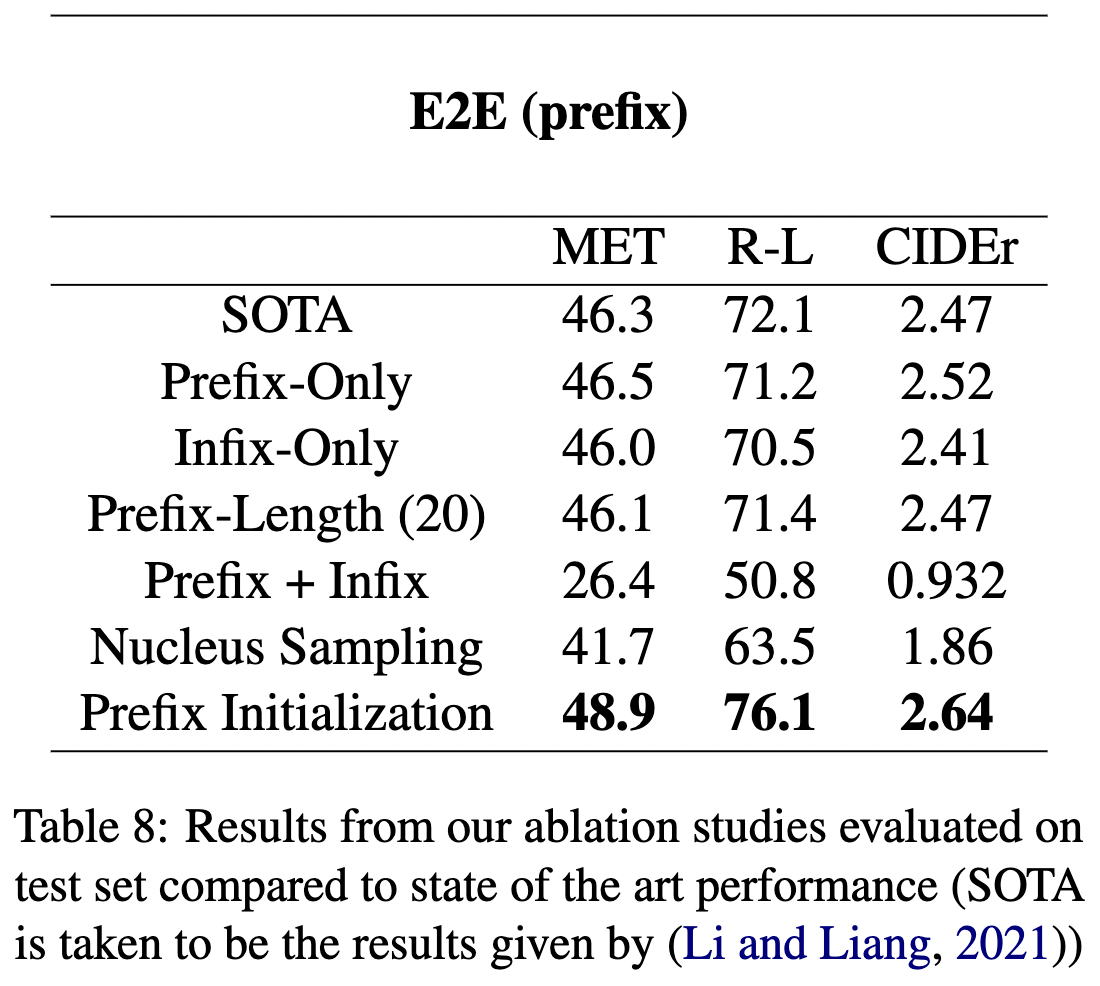
Reproduced paper from ACL | IJCNLP 2021 Li and Liang.
Conducted four additional ablation studies on prefix tuning for LLMs. Noticed a threshold
prefix length (15 to 20) after which accuracy declines in a small dataset setting. Identified a
prefix initialization that led to 2.6, 4.0, 0.17 point increase in METEOR, ROUGE-L, and CIDEr
metrics from state of the art.
|
|
|
Digital Humanities Tools as Sites of Human-Computer Interaction
Nobline Yoo,
Brian Kernighan
Junior Independent Work, Spring 2022
[paper]
[code]
[spotlight]
[award]
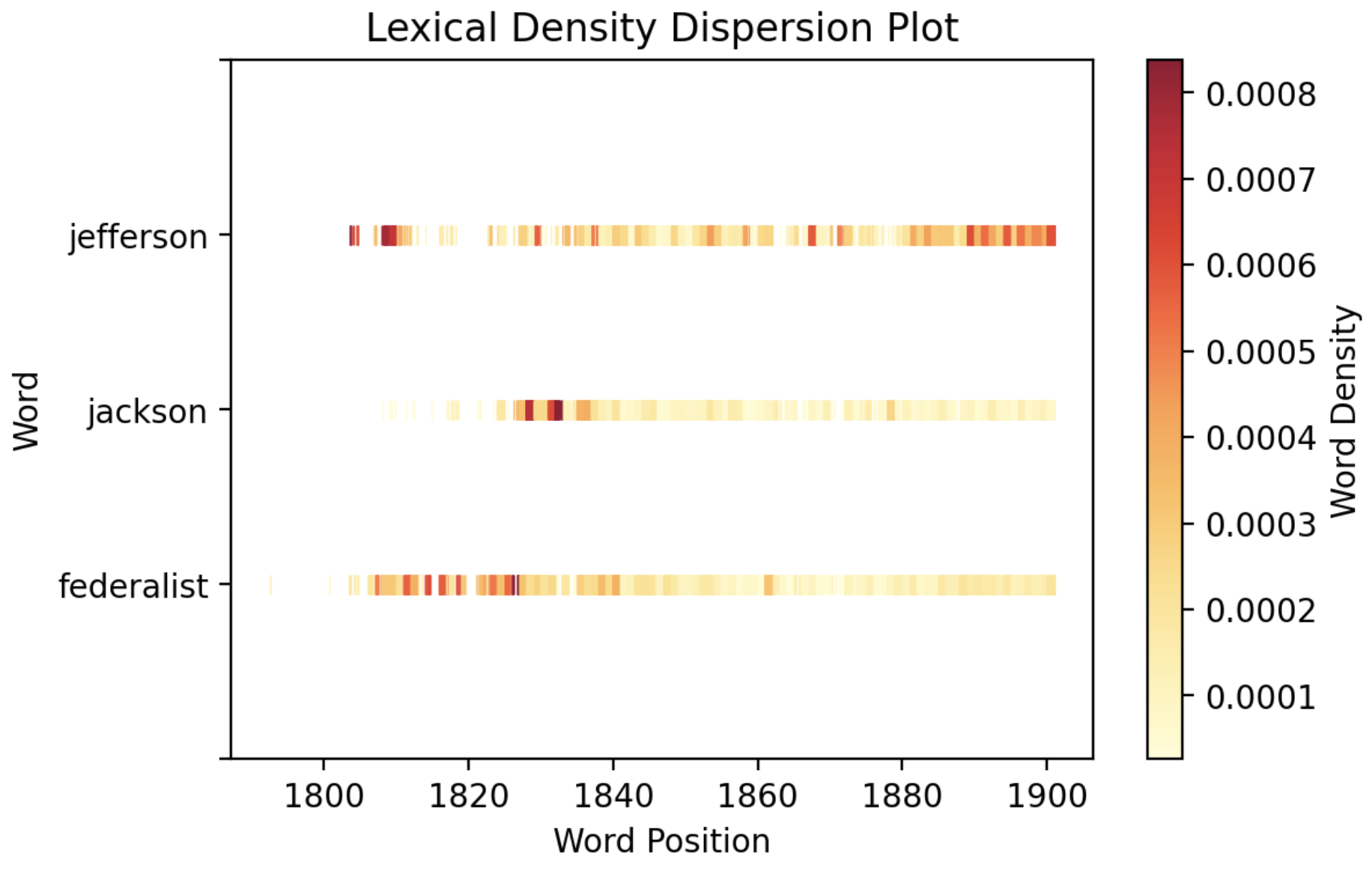
Created an analysis tool for the Chronicling America dataset, using word vector analysis and topic
modeling, and identified digital humanities tools as sites of human-computer interaction, motivating the need for a new framework
to maximize tool adoption.
Awarded
the Independent Work Award by the Princeton Center for Statistics and Machine
Learning and featured by the Princeton Center for Digital Humanities.
|
|
|
Drone: Navigating through Obstacles with Computer Vision
Introduction to Robotics, Fall 2022
[video]
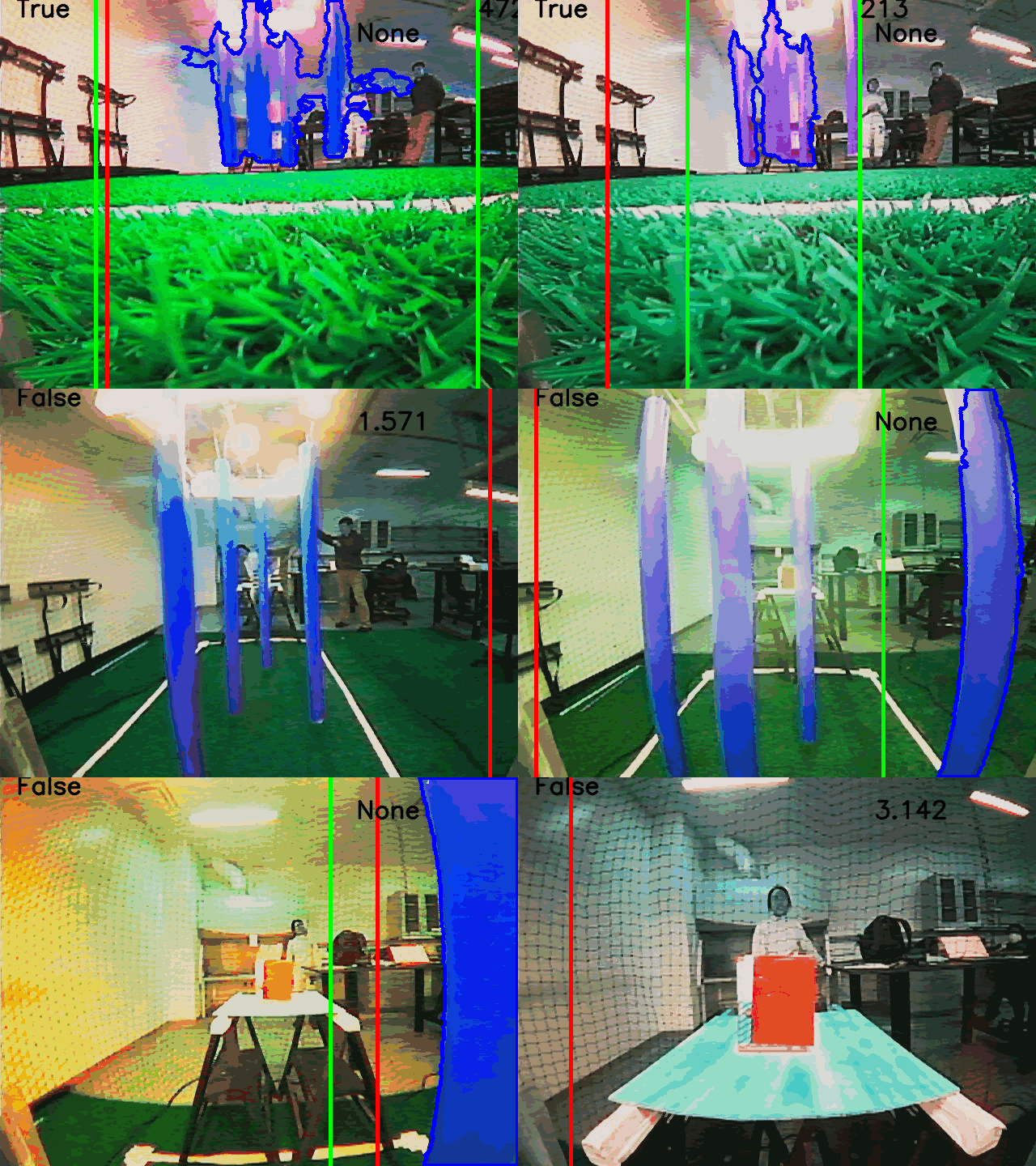
In a group of four, we programmed a drone to navigate an obstacle course using computer vision for obstacle and destination recognition.
|
|
|
"A ship, we see, is not just a ship on the sea."
Nobline Yoo,
Adele Goldberg
Psychology of Language Course Paper, Spring 2021
[paper]
A ship is a bowl on the ocean. But a ship also refers to "fortune," "opportunity," or even an "organization."
We explore how the word "ship" has come to acquire its present set of meanings, as derived from its prototypical
definition, focusing on the role that extended context plays in determining its place in our human mind map. Though unexplored
in the essay, it would be very interesting to ponder the role of extended context in vision settings for creating a
computer's "mind map" of objects and their relations with one another.
|
|
|
Graduate Course TA
COS126 (Fall 2024, Spring 2024, Fall 2025)
Led twice-weekly classroom sessions for students (sizes between 13-21) & graded assignments.
|
|
|
Undergraduate Course TA & Tutor
Undergraduate Course Grader, Princeton McGraw Center for Teaching & Learning Tutor (Fall 2022, Spring 2023)
COS333: Graded semester-long projects for Advanced Programming Techniques (COS333).
POL345, SML201, R: Mentored students in R programming, quantitative social science, and data science in
individual and group environments. Employed various, formal teaching methods to tailor assistance to individuals to help solidify
foundational knowledge and learn how to learn.
|
|
|
Princeton AI4ALL
Lead Instructor (Research Instructor in Summer 2019, 2020, 2021. Lead Instructor in summer 2023-25).
Led and set vision for 11-person instructional team on machine learning curriculum development for high-school students from underrepresented
backgrounds. Designed curriculum with focus on hands-on learning, social impact, and
ethical design in four core projects: (1-2) computer vision for accessibility and rainforest conservation,
(3) natural language processing for mental health, (4) robotics for environmental monitoring. Instructed cohorts of ~30 students each year.
|
|
|
Princeton Society of Women Engineers High School Engineering Colloquium
Panelist, 2023
Mentored high-school girls interested in STEM by answering questions about Princeton Engineering experience and giving advice for
paving a path forward in engineering.
|
|